Monday, November 26, 2007

Day Opening - November 26


Mardi Gras, New Orleans, Louisiana, USA.


Sunday, November 25, 2007

New co blogger

Soon, Seda Han Doukas, a dear friend of mine, will join us here as co blogger.
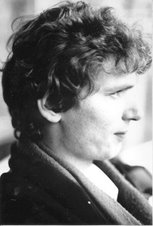
She is born and raised in Turkey but moved last year to Thessaloniki, Greece, where she married Thomas Doukas, a great friend! Picture of Seda is made couple of months ago.

Day Opening - November 25


Cementerio General of Santiago de Chile.


Below, Paris Street, Santiago de Chile


Statue "La Miseria" (The Misery, 1910), by Ernesto Concha, Museum of Modern Arts, Santiago de Chile.

Christmas shopping.
Pictures made by:
Eduardo Labbe
http://santiagodechiledailyphoto.blogspot.com


Saturday, November 24, 2007

Visa's, visa's and visa's.

As Turkey doesn't make any progress with integration in the European Union, where it wants so desperately be a member of (while many Turks say they don't want to be a member as an answer to the growing resistance in Europe against Turkey as a member of the EU),
the ruling by the European Court of Justice, caused controversy in Turkey. And it continues.
Today, TÜGİAD called for action. Their points are made upon believe not on facts.
This week we had a business luncheon with the some Turkish newspapers guru's. Their complain was that most of their staff members cannot speak English, can not read it well, and interpret, what most of the time comes in by wire, wrong.
To make it short: as Turkey wants that their citizens can freely travel to Europe, it has to change its attitude, since it looks like that the EU is always wrong and Turkey is always right.
To give you a full insight about Turkish citizens rights in Europe, please read the following thesis made by a Turkish PhD student.
For people who are unaware about current EU legislation, by December 21, the EU labor market for some countries such as Poland, will be open. More than 2 1/2 years after they formally joined the EU. Why should the EU give a privileged status to Turkey when it failed to implement agreement after agreement. And let the Generals do their dirty business.
Read the complete report here.

Within the family...

Derya put yesterday an interesting article on her blog.

All about marriages within the family. You can read her entry here.
For me is it amazing that some Islamic scholars in the Sharia law still defend these kind of practices.

Marriages in medieval Europe were often arranged, especially in the aristocracy and royal families to protect family possessions or extend them. Most of these marriages were often
between first degree cousins. Which is not called incest but inbreeding.

In most of the Western world, while incest generally describes forbidden sexual relations within the family, the applicable definitions of family vary.
Within the United States, marriage between first cousins is illegal in some states, but not in others.
In twenty-four states marriages between first cousins are prohibited, and another seven permit them only under special circumstances. Utah, for example, permits first cousins to marry only if both spouses are over age 65, or at least 55 with evidence of sterility; North Carolina permits first cousins to marry unless they are "double first cousins" (cousins through more than one line); Maine permits first cousins to marry only upon presentation of a certificate of genetic counselling. The other states with some, but not absolute, limits on first-cousin marriage are Arizona, Illinois, Indiana, and Wisconsin.
First-cousin marriage without restriction is permitted in nineteen states —
Alabama, Alaska, California, Colorado, Connecticut, Florida, Georgia, Hawaii, Maryland, Massachusetts, New Jersey, New Mexico, New York, Rhode Island, South Carolina, Tennessee, Vermont, and Virginia—and the District of Columbia.

First-cousin marriage is illegal in Arkansas, Delaware, Idaho, Iowa, Kansas, Kentucky, Louisiana, Michigan, Minnesota, Mississippi, Missouri, Montana, Nebraska, Nevada, New Hampshire, North Dakota, Ohio, Oklahoma, Oregon, Pennsylvania, South Dakota, Texas (such marriages may not be performed after 1 September 2005, although previous marriages are still recognized), Washington, West Virginia, and Wyoming, although the United States Constitution has been interpreted as requiring these states to give "full faith and credit" to such marriages performed in other states.

Yet, in the absence of a United States Supreme Court ruling, the scope of the Full Faith and Credit Clause is not clear in this context, especially as it would have implications on whether states were required to recognize marriages commenced in Massachusetts between same-sex couples. There are conflicts and courts have interpreted the clause differently. Some states, such as Wisconsin, have marriage abroad laws that make marriages by their residents in jurisdictions in order to circumvent their state's marriage restrictions null and void, and marriages contracted in that state to avoid restrictions in another jurisdiction likewise void.
The definitions of incest and inbreeding are distinct. Incest describes socially taboo sexual activity between individuals who are considered to be too closely related to enter into marriage. In other words, it is a social and cultural term.

Inbreeding describes procreation between individuals with varying degrees of genetic closeness, regardless of their relative social positions. It is a scientific term, rather than a social or cultural term.

With the exeption of Sweden, the USA has a total different view about this matter.
While in the Middle East the discussion is going on, who cares for all those retarded children born out these kinde of marriages? Culture relativisme still rules parts of the world.

Day Opening - November 24

Montreal, Canada.


The Olympic Stadium.


Friday, November 23, 2007

A milestone

Today the we got a visitor of Guatemala. Exactly a visitor from a country where I've been on my first trip to Mexico some 20 years ago. The trip from Mexico DF, to Guatemala was an interesting one; by bus, through the wilderness. A country which by that time was torned by a civil war. The USA didn't play a nice game there, in contrary, it was a nasty game. This person from Guatemala made this blog more international: we have now visitors from 100 different countries in a very short period of time, starting mid July 2007.
With almost 25.000 hits since July 17, 2007, we are growing, up to an average of 300-400 hits a day. Hope by the end of this year we will grow to 500 a day and next year up to 1.000 a day. Most of the content here is original. No dump junk links.
Thanks to the co bloggers, and especially to my I-net guru Priyank.
The information on the bar on the right part of this blog is not updated since mid October, due to the fact that none of the bloggers here have 'administrators features'. Thought beginning of this week that it was solved, but no. Still not.
Yasemin is not a co blogger anymore. Bea, an American living in Turkey for a long time is the new co blogger here. And there will be more space for guest writers.
Thanks to all the readers. We love your comments and suggestions

Metin

Before Metin left for his family to get in a 'Turkey coma' (people get that while eating Turkey) he wrote a nice posting on his blog: Turkey's Genocide (an annual one). Funny to read, but oh so true: 50 million Turkey's slaughtered each year...
Btw, today, is Metin's birthday. Guess how old? Congratulations!!!

An ordinary Dutch


This is Manon Thomas. An ordinary Dutch woman. Age: 44.
I think Dutch women in general look younger than they are.

Day Opening - November 23


Pictures of South Africa.


Thursday, November 22, 2007

The only USA president who won 4 elections on a row

Franklin D. Roosevelt (Dutch for field of roses) is the only president in the USA who's re-elected 3 times until he died on April12 1945, just before the end of the second World War.
Last night I saw a movie named Warm Springs. A movie about an illness he contracted 'Paralytic illness' also named polio.
But Roosevelt refused to accept that he was permanently paralyzed. He tried a wide range of therapies, including hydrotherapy, and, in 1926, he purchased a resort at Warm Springs, Georgia, where he founded a hydrotherapy center for the treatment of polio patients which still operates as the Roosevelt Warm Springs Institute for Rehabilitation. After he became President, he helped to found the National Foundation for Infantile Paralysis (now known as the March of Dimes). His leadership in this organization is one reason he is commemorated on the dime.
At the time, when the private lives of public figures were subject to less scrutiny than they are today, Roosevelt was able to convince many people that he was in fact getting better, which he believed was essential if he was to run for public office again. Fitting his hips and legs with iron braces, he laboriously taught himself to walk a short distance by swiveling his torso while supporting himself with a cane. In private, he used a wheelchair, but he was careful never to be seen in it in public. He usually appeared in public standing upright, supported on one side by an aide or one of his sons.

This movie is about the treatment he undergo in Warm Springs, Georgia. And shows why he was such a 'warm' president.

Under Turkish rule -The Jewish safe-haven myth

…true secularism does not mean just any secularism. It means secularism that protects individual freedoms and rights, not the ultra-nationalist kind that breeds an environment in which Adolf Hitler's “Mein Kampf” is a bestseller, the Armenian 'genocide' is denied and minorities are persecuted. Hrant Dink, the Armenian editor, was murdered by such a nationalist. It is this mix of virulent nationalism and predatory Islam in Turkey that makes the challenge for Turkish secular liberals greater than for any other liberal movement today.

Start reading here

Continue reading here.


Day Opening - November 22

Paris, Quatier Latin


Wednesday, November 21, 2007

The difference between Orange and Red

The Dutch qualified for Euro 2008. With an embarrassing win over Luxembourg: 1-0 last Saturday. Today they they were defeated by Belarus with 2-1 of.
The Reds won with 1-0 over Bosnia and are qualified for Euro 2008. At least they show spirit.
Dutch Talk too much...

Enlightment or sensational journalism

Below you will find an article which is published on Michael his blog., last week.
In my opinion, the heading is wrong, Its all about how to interpret events, and we saw a lot of dilettantism. But...this article is worth reading, since it is written by a witness.


Armenian Atrocities Against Muslim

Turks Part II November 13, 2007
by Michael van der Galiën


Below follows the translation of an article which appeared in the
Dutch newspaper the Algemeen Handelsblad from Tuesday, May 1925, 1920.
Here is the original article algemeen-handelsblad-1920.
------
We have received the following interesting letter from one of our staff members in the Balkans, the content of which gives a different view on the Armenian question from the customary one in Western Europe. We have the greatest trust in the objectivity of this staff member. The way in which he relates his story contains the proof that he is deserving of this trust- and we have therefore printed his correspondence unchanged and without comment. Just as under the reign of Sultan Abdulhamid abhorrent reports of mass slaughtering of the Armenians have been coming in again from Cilicia, as a result of which the nerves of the dulled world are once again shocked.
In absolutely no way is it my intention to justify slaughter, no matter by whom it is performed, and to try and protect the most heinous of all murders, [that is] murder committed on religious grounds. But there are two sides to every truth and when the Armenian press-propaganda manages to exploit the Armenian bloodbath in Cilicia against the Turks in the sense that she thus is trying to realize the complete destruction of Turkey by the Entente, then I am of the opinion that it is in the interest of truth to investigate whether truly only the beastliness of the Turks is to blame for these mass murders. I believe that I have some right to state this since, during the war, I had the opportunity to see Turkey, in a manner of speaking, in her negligee and of all places there where the Armenian and the Turkish tribes fought each other with the bitterest of hatreds.
In the spring of the memorable year 1918, when as a result of the Russian defeat, Turkey started the offensive again and the flag of the Prophet waved victoriously in alien countries, which had not happened since the peace of Kücük Kaynarca, I happened to find myself in the Armenian-Russian border region and so witnessed a part of the Turkish advance in the area that was predominantly inhabited by Armenians.
Whosoever knows what waging war is all about will have to admit that there is no better opportunity for getting to know a country and a people than during a war, where all human passions are expressed with violence, where the thin layer of culture and pretense disappears before the higher necessity of waging war. At the time I happened to find myself the only European in the critical surroundings and so I have been perhaps the only European witness of in what manner the events during the Turkish advance in Russian-Armenia occurred and how these two people related to one another.
Before I started my journey I already favored the Armenian side. During my stay in Constantinople, in the years 1916/17 I had already heard plenty of revolting details on the Armenian mass murders in Turkish Armenia and the Europeans, who were more or less well informed about the events in Armenia, therefore attributed blame to the Turks alone and they regarded the Armenians as the innocent sacrifices to [/victims of] the Turkish religious hatred and to the bestial pleasures of a barbaric people. My relationship with the Turks was good enough to also discuss with them this difficult issue that many a European did not even dare to bring up.
The position taken up by the Turks was to strengthen me in my convictions that the Armenians were innocent and that the Turks were to blame for everything. For with a quaintly brusque rejection I was answered by every Turk whom I had asked for information with regard to the pros and cons of the Armenian question: “Yes, everything is true what people say about us. We have killed millions of Armenians; it was a horrible bloodbath, but we were within our right and we are only accountable to ourselves for that.” I did not succeed in finding out further details, or grounds for these horrible acts.
And so I could only arrive at the conclusion … In the released passions of the war the religious fanaticism towards the Christians was given a free reign wherever there was opportunity. And that happened in the highlands of Armenia, where, cut off from the entire world, the Armenians were entirely in the hands of the Turks.
In the spring of 1918 I arrived in Trabzon from where, as is known, runs the only passable road to the interior of Upper Armenia. In 1915 Trabzon itself was witness to an Armenian bloodbath and three years later the Greek- and the Levantine Europeans still managed to relate to me in every detail the indescribable scenes of horror that occurred within the ancient city walls of Trabzon in 1915. How the streets of Trabzon ran red with the blood of Armenians! How the Armenian quarters went up in smoke and flames and that for days and weeks after the bloodbath the bodies of children continued to wash up against the ancient Constantine Dam in the harbour of Platana. I saw ruined stretches [of the city] and people told me that these had once been the Armenian quarters. People showed me Christian Churches. These were the Churches of the Armenians. People raked over dung heaps and bones and decomposed bodies appeared.
These are the bodies of Armenians, people told me. These are such awful realizations that one is never able to forget them and they evoke the same wish with everyone: God preserve every one of us for this barbarity and for the religious hatred of Muslims!
But a Prior of the Franciscan monks, a simple old priest, who undoubtedly stood on the side of the Christians, shook his head, when I started to curse the Turks. “You are mistaken”, he said, “the Turks are not the only ones to blame.
Yes, someone who comes from Europe and who wishes to judge Asia with a European understanding will [undoubtedly] condemn the crime of the extermination of this people. But it is not the entire truth that you have seen and heard. You ought to look upon these things through Asian eyes and have understanding for the fact that here two peoples have been going to battle with a hatred and bitterness that are centuries old. One has two mentalities here, the Turkish and the Armenian and both mentalities were saying that one of them had to go down. Everything was arraigned against them and they were made to suffer defeat. But are you convinced of it that the Armenians, under the same circumstances, would not have done or in fact did exactly the same!?
I have my reports from missions, sent forth by my order in Beyazit, Van, Erzurum, Erzincan; from the reports I know that in 1915 when the war with Russia started, it was the Armenians who, behind the Turkish Army, were fanning the revolution and who were depopulating Turkish villages and settlements and razed them to the ground. The subsequent events that happened in Turkey afterwards were only the consequences of this first hostile attitude of the Armenians. I admit that horrible things have happened and that never before so much blood was spilt. But the Armenians were not [exactly] innocent in how this bloodbath came about. And when the Turks went further than they had to, then the blame for that does not solely lie with the Turks, but with the mentality of Asia, where the hatred for a people runs deeper than with the European peoples and where war assumes beastly shapes.” Just look at Trabzon, for instance. You have seen the burned down Armenian quarters, but did you also see the burned down Turkish quarters? Did you happen to pay attention to the graves of the Turkish population that were still fresh? No! You can see that when the Armenians found themselves in the same position as the Turks, when they advanced victoriously under the protection of the Russian Army, the same spectacle occurred as in the year of 1915, but that time it was the Turks who got it in the neck. Wherever the Armenians found a Turk he was mercilessly hacked down, wherever they saw a Turkish Mosque it was plundered and set on fire. Turkish quarters went up in smoke and flames just like the Armenian quarters. You are presently about to travel round the country and you will still be able to follow in the footsteps of war: Bayburt, Erzincan, Erzurum, and Kars. You will still see smoldering heaps of rubble; you will still smell blood and corpses, but it so happens that these were Turkish corpses.” The Franciscan Father only told the truth. For months I traveled all across Armenia and Kurdistan and I found confirmation of what people had been telling me.
After the withdrawal of the Russian Army, which followed after the Russian peace, the troops of the so-called Armenian Army, took over the military operations in the occupied Turkish areas. During the Russian occupation the Russians protected the lives and properties of the Turks. What happened after the withdrawal of the Russians is heart rendering. The smallest Turkish settlements were killed down to the last man by the gangs of the Generals Adronits and Murat and Churches were destroyed down to the very last stone. Back then the Armenian expectations were still highly strung. Their plans reached far, encompassed the entire Turkish Empire. And they were hoping that they could settle the score with the old hereditary enemy, down to the last man, the last woman, the last child. I have seen ruins in Erzincan where hundreds of bodies of strangled Turks lay amidst the rubble. I have had light shone down wells that were full of bodies. I have seen with my own eyes that graves were opened in which the bodies of men and women were thrown haphazardly across one another, hundreds of them. Who did this? Those victorious Armenians. These spectacles accompanied me on the distant and long road through Upper-Armenia, Kurdistan right up into Russian-Armenia. And is it a wonder that the Turks, when they in their turn became the victors, exacted revenge, repaid evil with evil? I have to admit that during the Turkish advance to Russian-Armenia the murdering was continued by the Turks. On the other side of the border of the Sarikamish the Armenian settlements, of which there were many, were depopulated with the aid of fire and iron.
The most bitter of racial hatred was raging against the former victors, presently those who were conquered, in a bestial form, a wild country particular to Asia. Our European brains fail to comprehend this unrelenting hatred that sets people against people whipping them into a frenzy in which the worst atrocities are committed. But we should not forget that Upper-Armenia is a country the civilization of which can be compared to the primitive culture of the European peoples.
The peoples there do not form nations, but rather hordes. And just like in the primitive situation of peoples a meeting of two hordes meant the annihilation of one them, thus in the mountains around Great Ararat, people’s minds are still not directed towards coexistence, but rather towards destruction. In the bare mountains of Upper-Armenia there exists no compromise, only a fight to the death. The victor will live all the conquered can do is die. During my stay in Alexandropol (Gümrü) the following happened, which casts a good light on the mentality of the people there. From the direction of the group of mountains, the Alagöz, people one day heard the thunder of canons being fired.
, explained this rumble of canons as that the English were The Armenian population, which lived in fear behind the Turkish front lineadvancing against the Turks. And they were under the conviction that within several hours the Turks would be beaten.
Immediately there arose a rebellion behind the Turkish front line, and the weak Turkish posts in the Armenian villages were tortured to death in an ingenious manner. But the English did not come. A detachment of Kafkas-Armenians had tried to break through the thin Turkish front. Hence the reason for the rumbling canons. And when the fight was over only a couple of hours later there followed the revenge. The villages, in which Turkish soldiers had been murdered, were destroyed.
Can one then say that the Armenians were not to blame? In Alexandropol itself, in a purely Armenian city, where, despite the Turkish occupation, the Armenians quietly continued to do their work, I often came in contact with leading Armenian figures. The were continually living under a terrible fear that one day due to an ill-considered act of Armenian gangs the Turks would take revenge and that they would then be among the first to bear this revenge.
A number of the Armenian people, the best part, were in favor of a peaceful coexistence with the Turks. For it so happened that they were more or less compelled to live together. And in that case only tolerance could put a stop to the murdering. But the greater number of the people and the gangs, the so-called soldiers, did not wish to know of peace. Their slogan was: “Them or us, one will have to go down.”
The men, who preached tolerance and reconciliation, were cursed by the greater part of the Armenian people. People in Armenian circles openly said to me: “At present those Turks are in control. But soon we will be lord and master again and then we will not suffer a single Turk that falls into our hands to live. No agreement is possible between us. We have a score to settle that is centuries old. Our fight is as old as our people. This fight started on the day on which the Turks entered our lands and it will last until the day on which they will be brought down. We do not wish to have reconciliation. Cursed are they who befriend Turks.” Such was the mood in a time in which the Armenians had no hope ever to be freed from the Turks. It looked as if the victorious crescent would be making the whole of Russian-Armenia her own. With this in mind one can judge what happened when the Turks were forced to withdraw and the Turkish settlements once again fell into the hands of the Armenians. A comparison is only possible between civilized peoples.
With the peoples of the wildest [part of] Asia there only exist hatred and destruction. “The Turks are guilty. They have murdered [people].” However, are the Armenians less guilty, who also murdered as soon as they had the power to do so? One can only judge Asia with Asian eyes.
http://mvdg.wordpress.com/2007/11/13/armenian-atrocities-against-muslim-turks-part-ii/

Day Opening - November 21


Images of Sevilla, Spain.


Tuesday, November 20, 2007

Facebook

I wrote almost ten days ago that I left Facebook. Wrong, I am still out there in the schizophrenic world. But no vampires, werewolves and pirates on my neck anymore. Made some great contacts and I use it as an email account once and a while.
Oh...before I forget to mention the most important news of today, I married Idil, and she said yes, and now we are drinking champagne..)

Hans favorite Poet - Dylan Thomas


"My birthday began with the water -
Birds and the birds of the winged trees flying my name
Above the farms and the white horses
And I rose
In rainy autumn
And walked abroad in a shower of all my days"

'Poem in October' from Dylan Thomas' Collected Poems

Disaster in Bangla Desh

The disaster.

Day Opening - November 20


Flowers and plants in Costa Rica
One of my favorite countries.